Grief uses whatever door it can find
THE PULSE · NO. 2
Tuesday 29 September. Open Sky, Mullumbimby.
Early spring. Sun after rain, still windy, cold at night.
Waning gibbous moon in Taurus, two days past full. Sun in Libra, a week past the spring equinox.
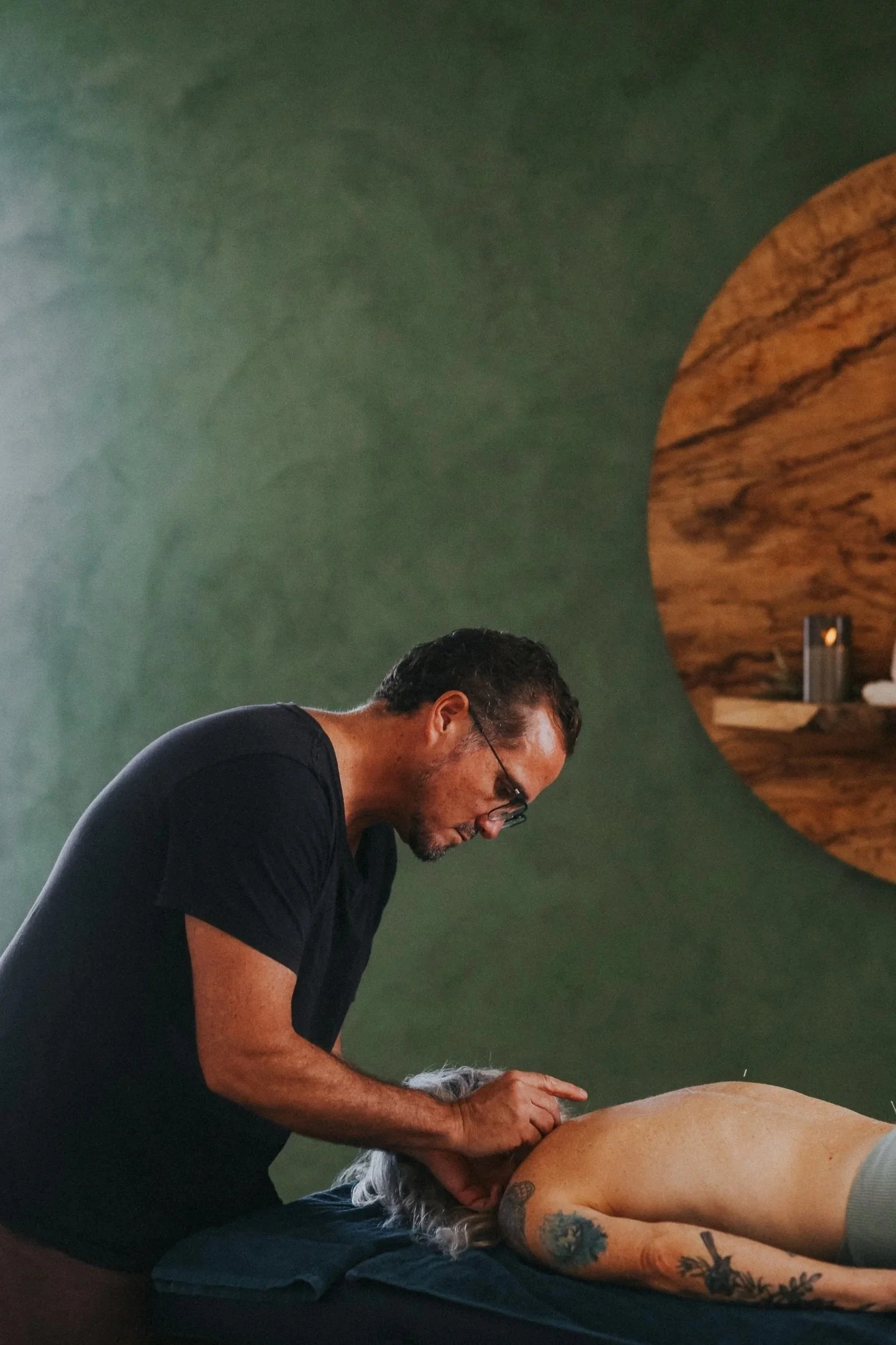
Community clinic, Open Sky, Mullumbimby
A lot of tears on the tables this week. More than usual. And almost none of it was on the booking form.
People don’t often deliberately book acupuncture for grief. They generally book it for pain, a tight shoulder. A cough. A back that won’t settle. Then they lie down, and about four minutes in, it’s a different conversation. Someone’s died. Someone’s dying. A year went badly. The body part is in the notes. The weather is in the room.
I don’t think that’s people being coy. I think it’s the body being accurate. Grief doesn’t announce itself through the front door. It comes in through whatever’s already open: the stiff neck, the chest that won’t fill, the thing that hurts for no reason the scan can find.
In Chinese medicine, grief belongs to the Lungs. Not as a metaphor, or not only. The chest, the breath, the surface of the body. And you can see it. People who are grieving breathe high and shallow, like the bottom half of the lungs has been closed for renovations. The shoulders come forward to protect the heart. The skin goes dry. Every cold going around finds them. None of that is in their head. It’s in the chest, and the chest is doing its best.
The Lungs sit in the Metal phase, the season of autumn, the part of the year that lets things fall. Their whole job is exchange: take in, let go, take in, let go, twenty thousand times a day. Loss asks the same of us and we usually can’t manage it. The breath gets held somewhere around the in-breath, because the out-breath is where the letting go happens and nobody’s ready for that yet. The old texts also give the Lungs a soul of their own, the Po, the animal spirit, or corporeal soul, the bodily part of us that lives in sensation and breath. That’s why grief feels so physical. It’s the part of you that has no words doing the grieving.
When I trained in transpersonal counselling, it was partly because people were having big emotional experiences on the table and I wanted to know how to be with them properly, without trying to tidy it up or talk them out of it.
So one of the first things I’ll ask is, where is it? Where do you feel it? People can almost always point. Here, in my chest. My throat. My belly. That tells me a lot about what to do, and it does something on its own as well. The moment grief has a location it stops being everywhere.
What I do with it isn’t complicated. A few gentle needles. A point on the chest that lets the breath drop a little. A point on the ear. A warm room. And then half an hour where nobody needs anything from you, which is rarer than it should be when someone has died.
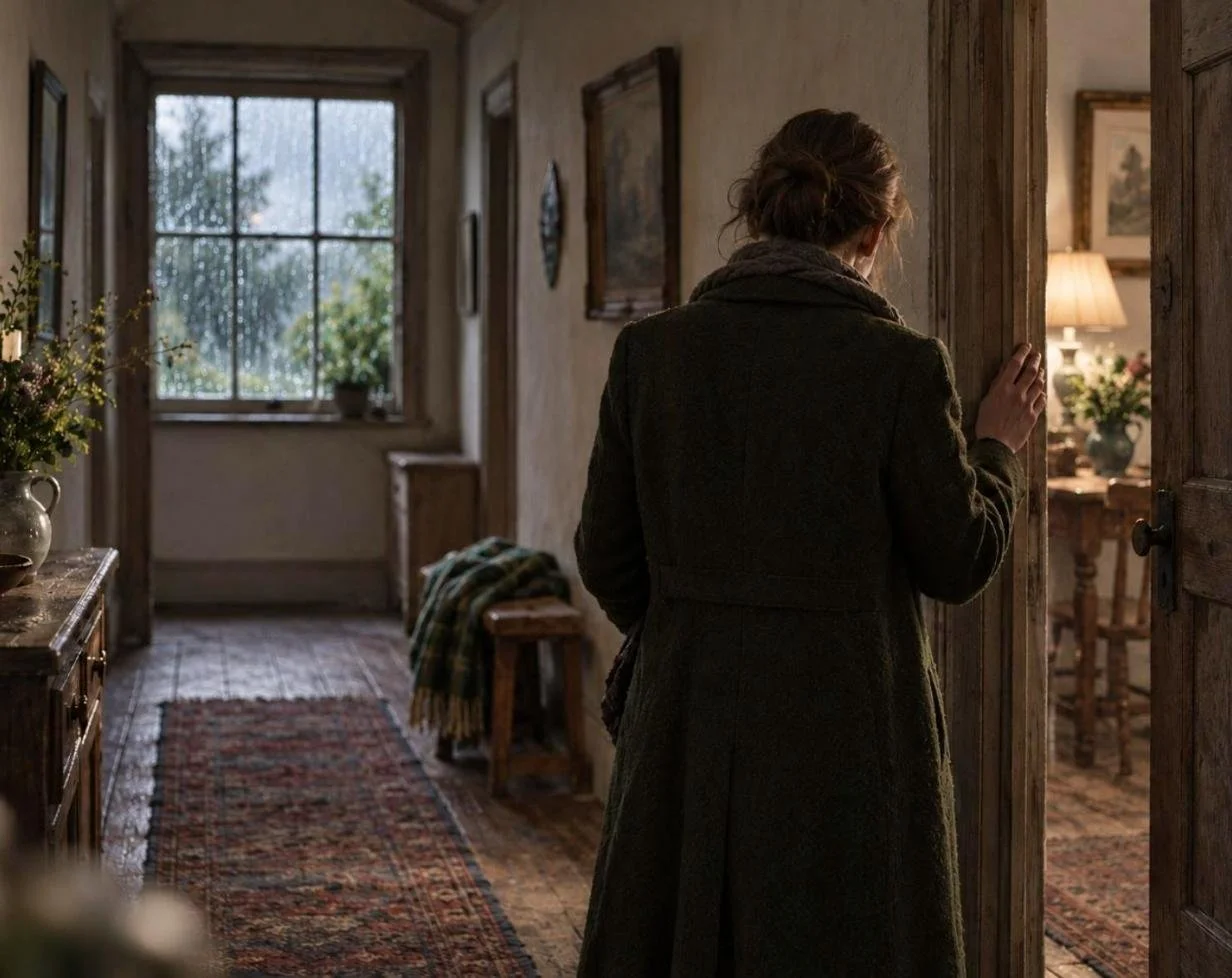
Grief that’s been held tightly tends to come out sideways when it’s given room.
Sometimes people cry. Sometimes they sleep. The breath changes. So does the pulse. Sometimes they feel nothing and then a great deal that evening, or wake up the next morning oddly irritable. I’ll tell you in advance that can happen. Grief that’s been held tightly tends to express through any outlet, given the space to do so. That’s not a problem to fix. It’s weather moving through. The Lungs are paired with the Large Intestine in this medicine, the organ of letting go, and sometimes what moves isn’t tears at all. The body has more than one exit.
There’s a reason I don’t rush any of this. Grief isn’t dysregulation. It’s the correct response to something real, and its intensity is a measure of what mattered. What I can do is help allow the body a bit more able to carry it: a slightly deeper breath, a chest that opens a few millimetres, a nervous system that remembers it’s allowed to rest. The loss doesn’t change. The person holding it gets a little more room.
Grief isn’t an illness, and I’m not here to fix it. But if your body’s carrying it and you’d like somewhere to put it down for forty minutes, that’s an acceptable reason to come. You don’t have to explain it at the door.
· · ·
Related reading: A Body, a Lifetime · Rooms Have Weather · The Cosmic IP Address · I Couldn’t Climb Stairs
Community clinic, Tuesdays and Thursdays. Open Sky, Mullumbimby.
Days and times vary from week to week. Check this week and book at Open Sky, or contact Steven. Bookings recommended.