Two springs before the storm
THE PULSE · NO. 3
Tuesday 13 October. Open Sky, Mullumbimby.
Humid, heavy air, a storm building behind the hills.
Two days after the new moon, a thin crescent in Scorpio. Sun in Libra.
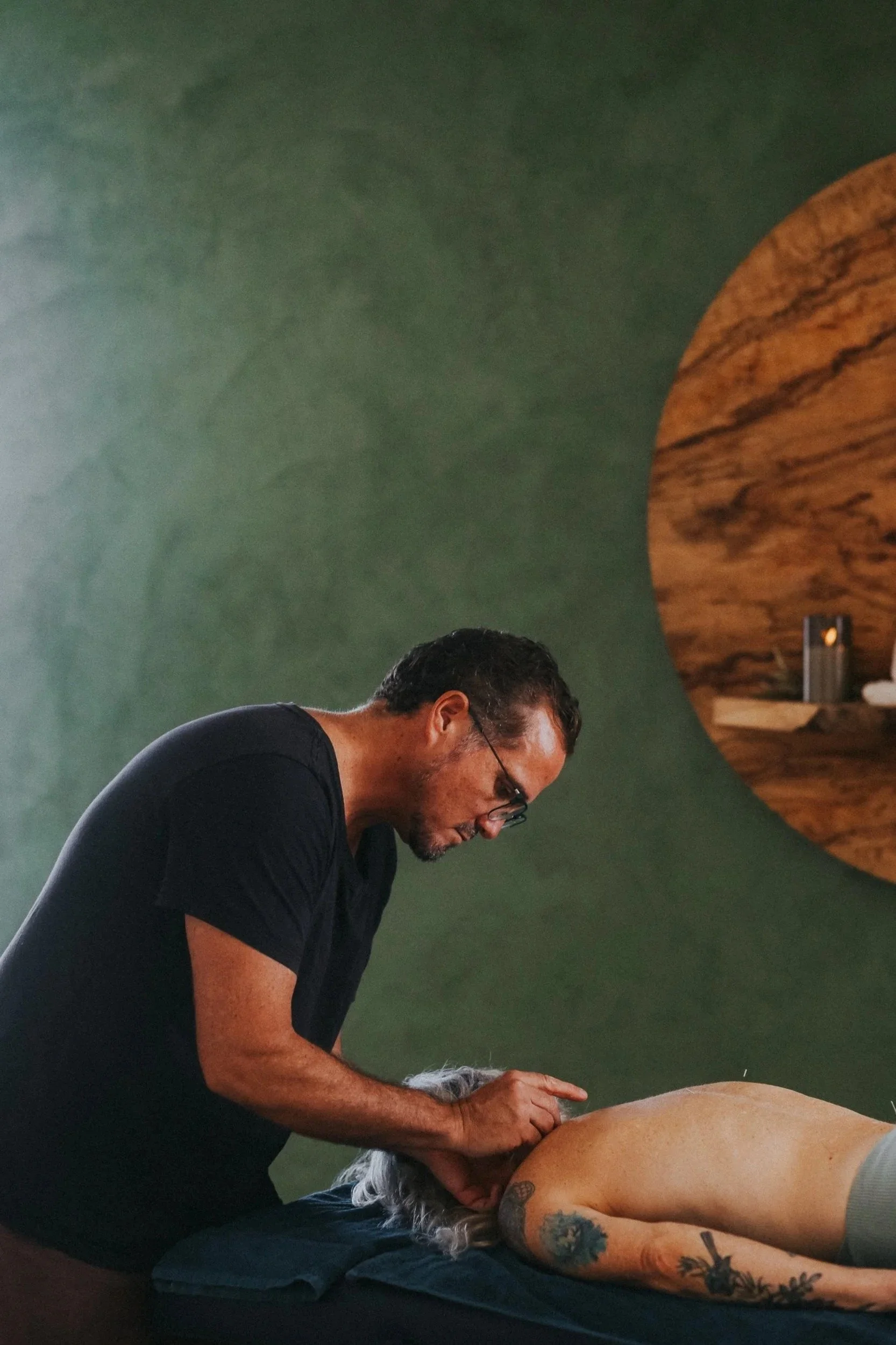
Community clinic, Open Sky, Mullumbimby
You know those days where the air just sits on you. Heavy, sticky, a storm somewhere behind the hills that won’t come. Tuesday was one of those. You could feel it in the room before anyone lay down.
And the same thing kept coming up. People came in for all different reasons, a shoulder, a back, a bit of everything. But underneath, the story was the same. Wired. On edge. Awake at two in the morning for no good reason. Ordinary demands landing harder than they should. A mind that had been going since before dawn and couldn’t find the off switch.
By lunchtime I noticed I kept going back to the same two points. I hadn’t planned it. Each time it was about the person on the table. But I kept landing in the same spot. That happens more than you’d think. The hands notice a pattern before the head has named it.
They sit side by side on the inside of the knee, in the crease. Liver 8 and Kidney 10. One’s called Ququan, Spring at the Bend. The other’s Yingu, Yin Valley. Lovely names, attentive, meaningful. A spring and a valley: two places where water collects and goes deep.
Here’s why they made sense, and I’ll keep it simple. In Chinese medicine the body has channels running through it, a bit like rivers, and each one belongs to an energy system, which includes organ systems: Liver, Kidney and so on. Along each channel there are points, and each point has its own character. Some are linked to fire, some to earth, some to water. Both of these are water points, and both sit at the knee, where the channel runs deepest and slowest, like a river widening into a pool. One is on the Liver channel, which belongs to wood. The other is on the Kidney channel, which is water itself.
In five-element theory, Water feeds wood.
If a tree’s dry and thrashing around in the wind, you don’t prune it. You water the roots.
Wood is the part of life that moves towards expression. It reaches, it plans, it wants to get on with it. Water is what it reaches from: the reservoir, the stillness, the reserves you don’t spend. In a person that’s the Liver and the Kidneys. The Liver houses the Hun, the dreaming, imagining, forward-moving part of the soul. The Kidneys house the Zhi, the will, the deep quiet that lets you stay put and keep going. Vision needs a floor to stand on. Movement needs something to run on.
When that relationship is thin, you get exactly what I saw on Tuesday. Plenty of activity, not much direction. The mind reaching into the future while the body can’t settle in the present. Possibility turns into pressure. Anticipation turns into vigilance. The same drive that normally grows things starts burning through the reserves it depends on. Two in the morning, planning.
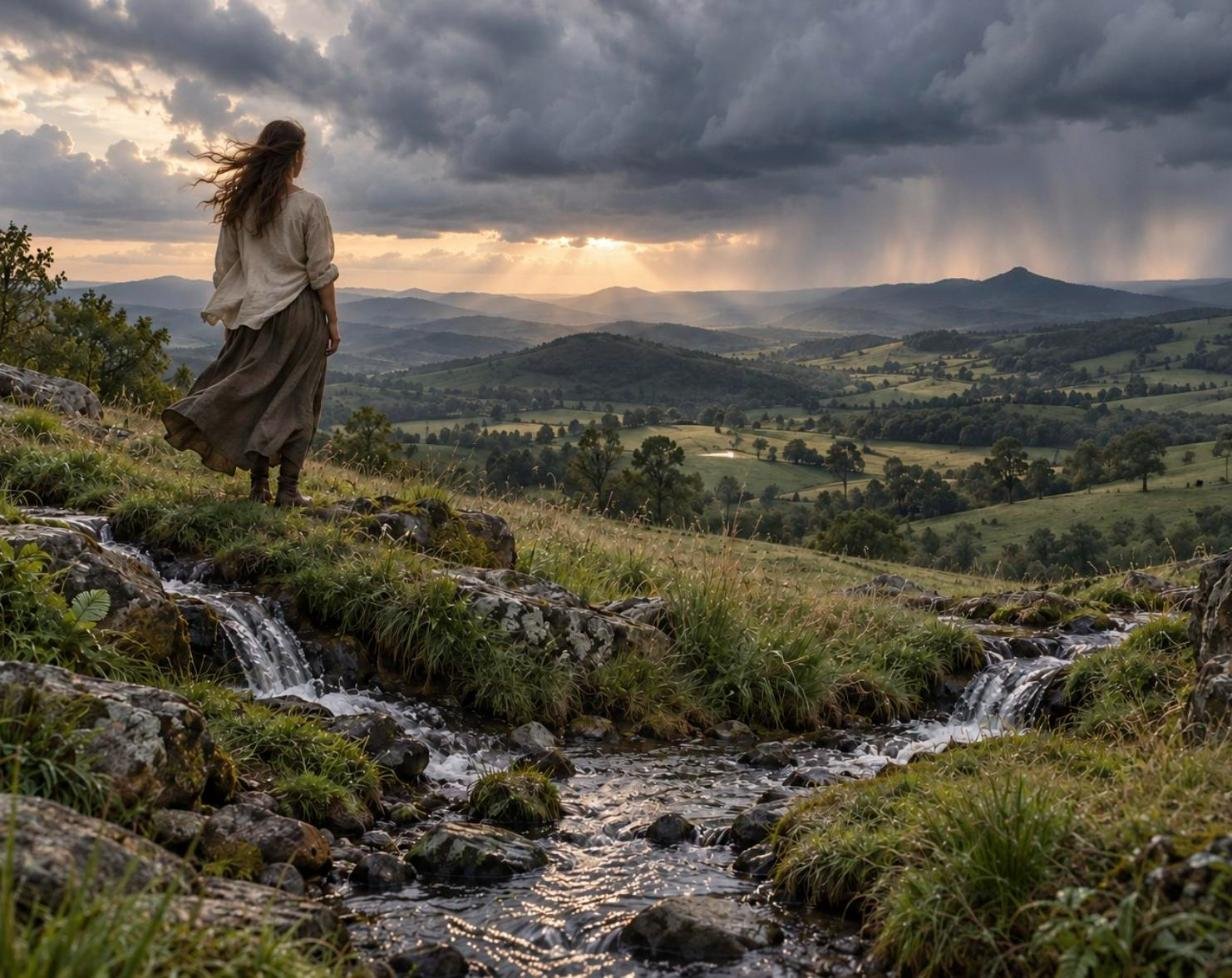
Water feeds wood. If a tree’s dry and thrashing in the wind, you water the roots.
And that was the day, really. It’s spring, which is wood season. The Liver is running hot, as it should. Heat and pressure building with nowhere to go. Wind picking up. A room full of people doing exactly what the sky was doing.
The fix isn’t to stop the imagining. It’s to give it somewhere to land. This is something I think about well beyond the clinic. Any real growth, in a life or in a person, is a trade between opening up and having enough ground to take in what the opening shows you. More sensitivity, more awareness, more going on inside than you can digest, and expansion stops feeling like growth and starts feeling like being unmoored. When the movement is too much, you don’t always need to rein it in. Sometimes you need to deepen what it’s moving from. The yin points can reach up and grab ahold of the unanchored yang, and bring it home.
Now, you might ask, the air’s already wet, so why add more water? Fair question. But humidity isn’t nourishment. What I was after was more like shade and a deep well. Something to cool things down and anchor them, so whatever’s rising has somewhere to settle.
This isn’t a study, and I’m not going to pretend a storm front has been linked to two points on the knee. A humid afternoon doesn’t put a pattern in anyone. It’s a way of reading a day that practitioners have used for a very long time, and what it’s really good for is attention: it keeps reminding you that the person on the table is part of a bigger weather system, exchanging with it the whole time. You can test the first part yourself. Next time a storm’s building, notice how you sleep the night before it breaks. Then notice what your mind does with the hours it gains.
Most of what I do is about the person in front of me. Tuesday was a reminder that the weather’s always a pervasive influence, and that the body knows the forecast before you do.
When the branches are restless, start with the roots.
· · ·
Related reading: Rooms Have Weather · I Couldn’t Climb Stairs · Get Your Feet Off the Cold Floor
Community clinic, Tuesdays and Thursdays. Open Sky, Mullumbimby.
Days and times vary from week to week. Check this week and book at Open Sky, or contact Steven. Bookings recommended.