THE PULSE · NO. 8
Tuesday 27 October. Open Sky, Mullumbimby.
Hot, humid and muggy, the air still electric after the thunderstorms.
A day past the full moon in Taurus. Sun newly in Scorpio.
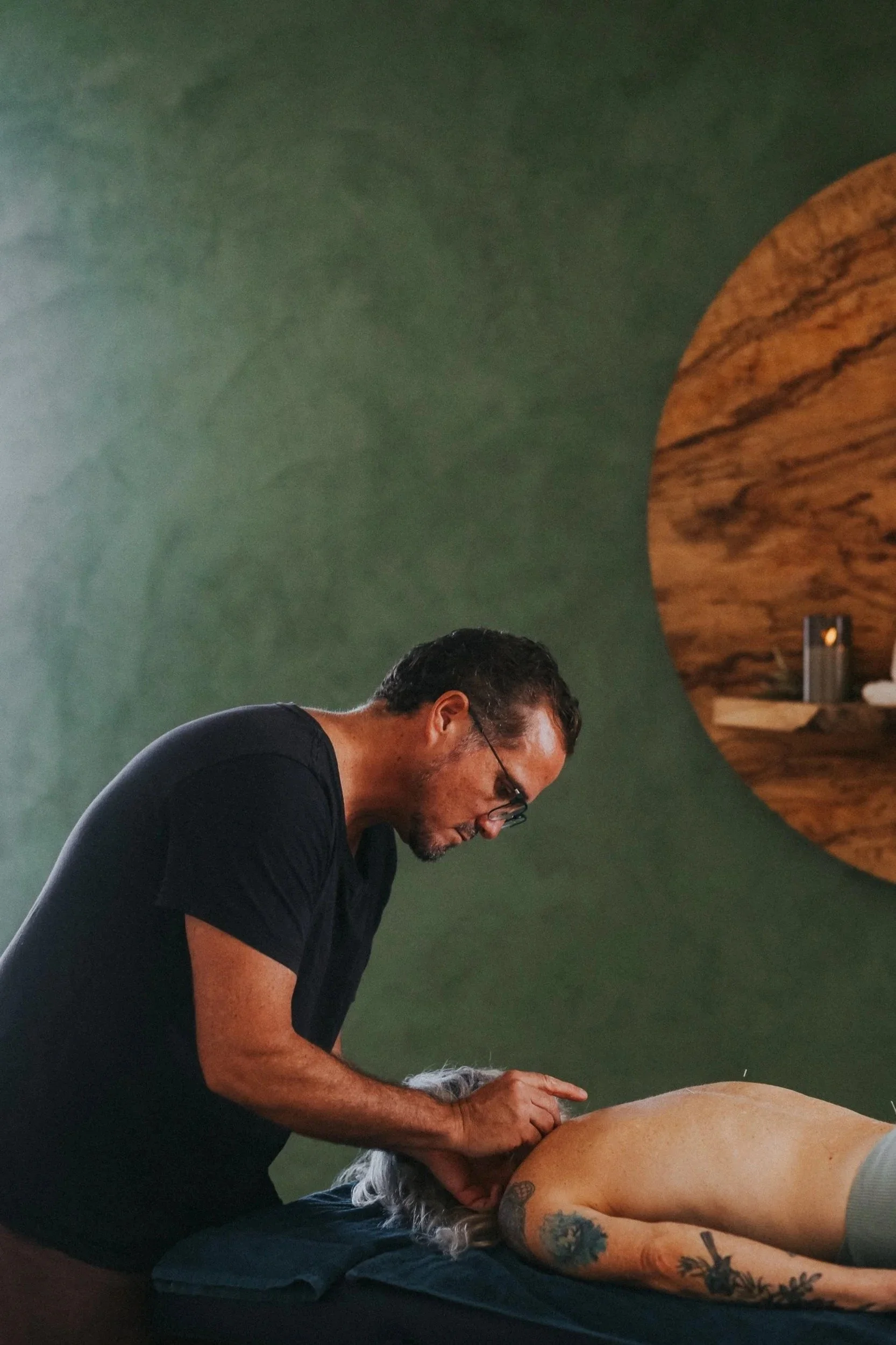
Community clinic, Open Sky, Mullumbimby
When I first put my fingers on her wrist, the pulse was standing at attention. Not fast, exactly. Alert. The kind of pulse that’s listening for something.
She told me she sleeps all right, technically. But at night she’s on duty. A thin, high sound comes in, like crickets, and she lies there feeling as though she’s glitching. Her neck and upper back have been tight for as long as she can remember. She says you can see it in photographs of her as a teenager: shoulders up, jaw set, ready.
Somewhere in the conversation she said something that stopped me.
I think it’s my grandfather.
A job someone needed doing
She meant her mother’s father. A man who, as she understands it, carried that same alertness.
In his life there may well have been very good reasons for it. In plenty of families, a generation or two back, somebody had to keep watch because the danger was real: war, hunger, a border crossed in the dark, a household where it paid to notice moods before they turned.
That alertness wasn’t a flaw. It was a skill. It kept people alive.
Some of us are here because someone stayed awake.
The question is what happens to a skill like that once the conditions that called for it have gone.
There’s some fascinating, still contested research into whether severe stress can leave biological traces across generations. The evidence for inherited changes in gene regulation remains uncertain, particularly in humans. The developmental picture is easier to recognise.
A child’s nervous system takes its cues from the nervous systems around it. We learn what safety feels like through the people who hold us, the atmosphere of the household, the things that make adults tense or allow them to relax.
If everyone around you is listening for danger, you may learn that listening is simply what being alive requires.
Nobody teaches it. It’s absorbed, the way an accent is.
The sociologist Pierre Bourdieu had a word for these deeply acquired ways of being: habitus. The habits of perception, posture and response that become so familiar we scarcely recognise them as learned.
I think there’s something useful in that idea. The watchman can be handed down without anyone telling his story. A set of shoulders. A way of breathing. A pulse that waits.
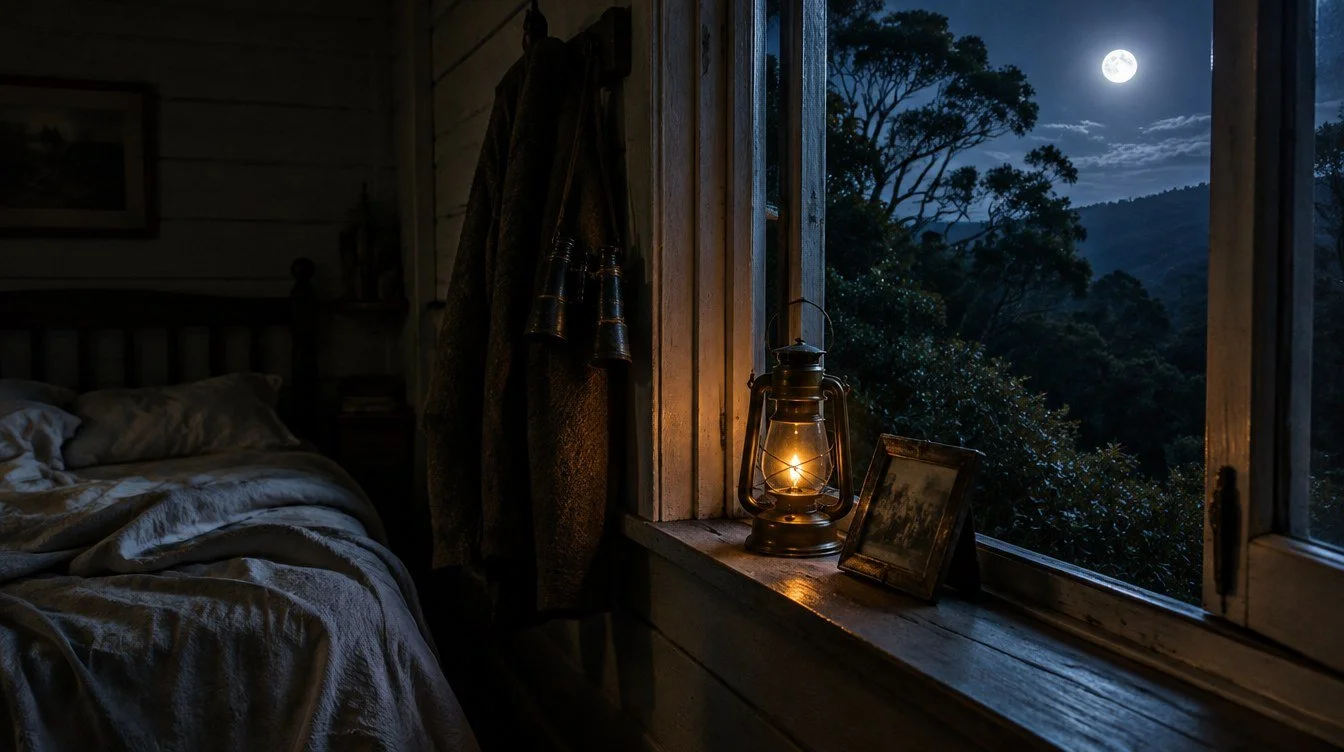
Some of us are here because someone stayed awake.
The body soul
Chinese medicine has another way of approaching this.
The classical texts describe the po, often translated as the corporeal or body soul, as an aspect of our being associated with the Lungs and the immediate experience of physical life.
It’s there in the breath, the skin, the reflexes. The part of you that flinches before you’ve had time to think, that startles at a sound, that senses something unsettling in a room before you can explain why.
In the old Chinese understanding, the hun, the more ethereal aspect of spirit, returns towards heaven at death, while the po belongs to the body and returns towards the earth.
I’ve always found that relationship between body, instinct and ancestry particularly interesting.
There are experiences we carry that seem to sit beneath ordinary thought. We can understand our circumstances, know intellectually that we’re safe, even recognise the patterns we’ve inherited, and still find our body preparing for something.
The shoulders remain raised. The breath stays shallow. Sleep comes, but some part of us continues listening.
I find the po a useful way to understand that layer of experience. It gives us a language for the part of ourselves that responds before we have made sense of what we’re responding to.
And it suggests something about how we might work.
If the vigilance is held at that level, insight alone may not be enough. The body needs its own experience of something different.
A different conversation
That shaped the treatment.
A system that’s spent years watching for danger doesn’t always respond well to being pushed. Strong intervention can become one more thing to guard against.
So the needles were few and gentle, chosen to settle rather than stir. There’s a point I’d normally reach through the sole of the foot, and I approached it from the top instead, so as not to set off any alarms.
And then we waited.
This is one of the things I value most about acupuncture. There are times when the work happens through a kind of conversation that doesn’t require words. You listen through the pulse, notice the breathing, feel the quality of the tissue changing beneath your hands.
You give the body time to respond in its own way.
As the treatment settled, the pulse dropped. You could feel it let go, the way a dog lies down once it’s sure you’re staying.
When she sat up, her jaw had softened and she was smiling differently.
Nothing had been fixed. Something had been allowed to rest for a while.
Standing the watchman down
We talked about what she might do at home, and it wasn’t really technique. It was closer to a conversation with her lineage.
The first part was gratitude.
Before asking the watchman to stand down, it helps to acknowledge the work he’s been doing. Perhaps that vigilance once served someone very well. Perhaps it helped keep the family alive long enough for her to be here.
There’s a tendency to treat these protective patterns as problems to overcome. Yet fighting them can become another form of vigilance. Another demand for the body to get something right.
I wondered what might happen if she approached that watchful part of herself with some kindness.
The second part was forgiveness, although I think of that word in a fairly particular way.
More like releasing a debt.
There may be things our parents and grandparents were never able to put down. Ways of living they developed because their circumstances demanded them. We can recognise what they endured, and even feel gratitude for what their adaptations made possible, without continuing to carry everything in exactly the same shape.
You can honour someone without repeating their suffering.
The third part was simple. I suggested she try speaking quietly to that watchful part of herself at night, with a hand resting on her chest or belly.
I’m safe. I’m loved. I’m protected.
Or whatever words felt true enough for her body to receive.
The intention wasn’t to convince herself of something. It was to begin offering a different experience, gently and repeatedly, to the part of her that had grown accustomed to being on duty.
The watchman may have been waiting a very long time for someone to tell him the shift is over.
There were practical things too. A little white noise or soft chanting to soften the high sound. A dark room without glowing standby lights. Gentle pressure along the jaw before sleep.
And if she found herself awake at two in the morning anyway, perhaps she could allow the hour to be what it was, without turning wakefulness into another failure.
These are small gestures. But when the body has spent a lifetime anticipating danger, small, repeated experiences of ease can matter.
The inheritance we leave
I think of this kind of work as lineage healing, in a modest sense.
We can’t undo the lives of those who came before us. We can, however, become more conscious of how those lives continue through our own.
A child learns something from the atmosphere of a household. From the way a parent breathes, responds to uncertainty, receives affection, or allows themselves to rest.
And when those patterns change, even a little, the experience available to the next generation changes too.
There’s something quietly profound in that.
Within the Daoist understanding of ancestry, our relationship with those who came before us continues through the way we live. We honour them through remembrance, through our conduct, and through the care we take with the life we’ve inherited.
I like the thought that learning to rest might be part of that relationship.
That a grandfather who spent his life keeping watch might, in some small way, be honoured by a granddaughter who no longer needs to.
It’s a quiet kind of service to sleep well on their behalf.
And it leaves me wondering how many of us are still standing watch for someone who came before.
Who in your family kept watch? And what might it mean to let them rest?
· · ·
Related reading: The Cosmic IP Address · I don’t want to calm you down · Grief uses whatever door it can find
Community clinic, Tuesdays and Thursdays. Open Sky, Mullumbimby.
Days and times vary from week to week. Check this week and book at Open Sky, or contact Steven. Bookings recommended.